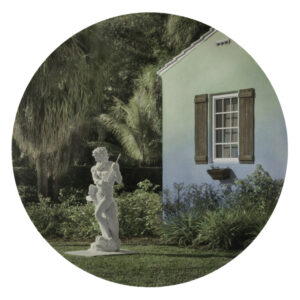
In an era when photography appears to dissolve into digital immediacy and mechanical repetition of images, Cuban-American photographer Silvia Lizama (Havana, 1957) insists on pausing. Her photographic practice evokes the density of a gaze, where each of her images rejects the condition of infinite copy to assert itself as a unique, intervened object, as if time itself were suspended on the photographic surface.
Lizama blurs the lines between photography and painting, between the documentary and the fictional, between capturing a mundane environment—a suburban facade, a roadside motel, an out-of-place chair—and its chromatic reimagining. However, what is truly unique in her work is how she connects the intimate with the historical, turning the damaged, fragile, and seemingly minor into centers of meaning. Her status as a Cuban in exile (her family emigrated to Miami in 1960) influences her work not as an explicit political message but as an underground rhythm that seeps into every architectural void and domestic interior marked by absence. In that space between the personal and the collective, between reality and reinvention, the photographer creates an imaginary that invites us to look again: we don’t just see the traces of a life, but the persistent question of what is worth remembering.
It seems that your personal history with photography began long before you decided to become a photographer, with the domestic rituals of your mother and her Kodak camera. How much of that initial curiosity has shaped the way you construct images today?
Absolutely, the early exposure to family photographs had a profound impact on me. Some of the most vivid memories I have are the ones my family captured on camera—those moments seem fixed in time, while others fade or shift with memory.
I was fascinated by the camera itself before I even understood its function. It felt like a magical object, capable of holding on to something that would otherwise disappear. As a natural collector, I saw my mother’s Kodak camera as a tool to gather and preserve experiences. Today, while I don’t necessarily try to replicate the look or feel of family album photos, that early curiosity still drives me. I use the camera to hold on to places and moments I find compelling—things I don’t want to forget or things I want to share with others.
As an artist from the Cuban diaspora, your images move between personal memory and pictorial reinvention. Drawing on Didi-Huberman’s notion that every picture ‘looks back’, how do you feel those visual memories of your childhood in Miami and the Cuba you left behind illuminate your present?
As an artist from the Cuban diaspora, the visual memories of my childhood in Miami and the Cuba my family left behind are living presences—embedded in my DNA, subtly guiding each photograph I make. These impressions aren’t simply nostalgic; they are visceral and deeply felt, shaping the instinctive choices I make with the camera.
In my early years as a photographer, while creating my photographs, I often followed a gut feeling without fully understanding why certain images felt important. Over time, I began to recognize recurring patterns, motifs, moods, and spaces that reflected my very personal early experiences as a refugee: the transient hotels we lived in, the disjointed domestic interiors, the cultural dislocation.
Georges Didi-Huberman’s idea that every picture “looks back” resonates with me profoundly. When I photograph an empty hotel room, a misplaced chair, or a solitary photo on a wall, I feel the image confronting me, asking what I remember, what I’ve forgotten, or perhaps, what I’ve reimagined. In those moments, the boundaries between memory and imagination begin to dissolve.
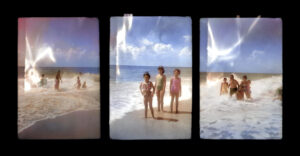
The act of photographing—and later, hand-coloring my prints—becomes a space for both recollection and reinvention. The Cuba of my family’s past and the Miami of my upbringing exist together in my work as both real and imagined landscapes. This dialogue between past and present, memory and invention, is where my artistic identity lives. It’s through this interplay that my images are made.
The rescue and preservation of personal archives, such as your mother’s negatives, and those of others, as seen in the book Cuba: 1930–1958, with photographs by Roberto Machado, seem to occupy a special place in your work. How does working on your own memory differ from working on someone else’s? Where do you draw the line between homage and reinterpretation?
I find true personal satisfaction in collecting, preserving, and repairing things, especially when it comes to photographic materials and memories.
The intent behind each project shaped its visual outcome. With the publication and exhibition of Dr. Roberto Machado’s photographs in Cuba: 1930–1958, I felt a deep responsibility to preserve and accurately present the work of this gifted photographer. I did not alter, recompose, or change the imagery in any way. Instead, I carefully retouched damaged areas and reprinted the photographs honoring what I believed to be his original vision. Through his work, I began to see glimpses of the Cuba my parents often spoke of; one I was too young to remember or fully appreciate.
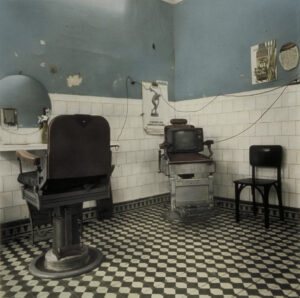
In contrast, the Memories project, which used personal family negatives taken by my mother, was more interpretive. Many of the negatives were damaged and had never been printed. Reimagining these images using my skills in photography, retouching, and hand-coloring became a deeply personal act, an attempt to reconstruct my own faded memories. I am especially grateful to my mother for documenting our family’s experiences under difficult circumstances.
While the Roberto Machado project was a respectful homage, the Memories project was a deeply personal reinterpretation.
In your work as a photographer the decision to print on silver gelatin and colour by hand is both technical and conceptual, as it makes each copy unique. What sparked the idea for this process? How long does it take you to go from taking a photograph to creating a finished pictorialist object?
As an undergraduate photography student at Barry University, I was introduced to hand coloring by my professor, Steve Althouse. One of our projects required me to hand color an image using Marshall’s Photo Oils. It only took that first image to change my life. I immediately fell in love with the process. From that moment on, I dedicated my time to perfecting the technique, using it as a way to reimagine my world. The uniqueness of each image became an added bonus.
While the process of hand coloring isn’t necessarily difficult, it is meticulous and time-consuming. It requires patience and precision, applying oils with toothpicks wrapped in cotton. After I shoot and develop the film, I print the image in a traditional darkroom. Then, I spend anywhere from 3 to 10 hours hand coloring each print, depending on the level of detail in the image. I can try and reproduce an image but it is impossible to make two identical prints.
Your photographs seem closer to memory or fantasy than to a factual record. What role does fiction play in your approach to “telling the truth” through photography? How would your photography be different if you had stayed in Cuba? Do you feel that your work evokes a parallel relationship between Miami and Havana?
This is a layered and multifaceted question, and it gets to the heart of how I approach photography. At its core, I use photography as a way to document places and moments that hold personal or cultural significance. But while the camera records the surface of things, it’s through hand-coloring, a technique nearly as old as photography itself, that I begin to reinterpret that reality. The color becomes a filter for memory, emotion, and personal history, allowing me to move beyond documentation into a more subjective, expressive space. In that sense, fiction, or more accurately, poetic license, plays a central role in how I “tell the truth.” It’s not about fabricating reality but rather layering it with meaning drawn from my own experience.
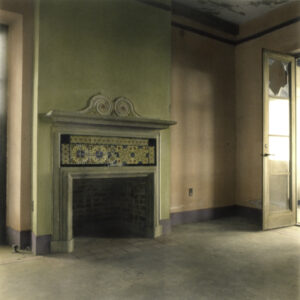
Much of my work explores the complexity of being Cuban American. I was raised in Miami in a Cuban household, and for a long time, I didn’t recognize the duality of my cultural identity. We spoke Spanish at home, ate Cuban food, and followed traditions that didn’t always align with the broader American culture outside our front door. It wasn’t until I grew older that I began to understand the significance of that dual experience, and that understanding inevitably seeps into my work.
Had I stayed in Cuba, I believe I would still have pursued fine art photography, but my imagery would undoubtedly be different. It would reflect a different rhythm of life, a different relationship to place, history, and memory.
Since the 1970s, you have been documenting South Florida, but always with a perspective that departs from classic documentary photography, as you mention in your interview at the History Miami Museum. How do you decide which elements of the environment —a statue, or an architectural fragment— become the subject of your photographs? Is there an intent to challenge what is typically considered worthy of being photographed in that selection?
There is usually a very specific and exciting moment when I realize I’m about to begin a new photographic series. For example, years ago during my daily commute on I-95, I found myself stuck in traffic, repeatedly passing by construction sites. I started noticing the textures, tracks in the sand, scattered concrete blocks, the raw geometry of these spaces. These sites felt like unearthly environments attached to a different place, a different time. That moment sparked a series that lasted over a decade, where I documented these sites across South Florida. While the images recorded factual elements of the environment, the hand-coloring reflected my emotional and imaginative response; how I felt about what I saw.
I never fully know what will inspire a new series, but it always begins with something I see or experience. I see an image and know that I need to explore the subject more deeply. I then spend years following that instinct, building a body of work that completes the vision.
I consciously avoid traditional images of beauty, idyllic landscapes and polished interiors because I’m more interested in spaces that speak to me on a personal level. The statues, architectural fragments, and overlooked corners of the city that I photograph are chosen intuitively, often because they challenge expectations of what is considered “worthy” of being seen or remembered. My intent is not only to document but to reframe, to invite viewers to see these environments as I do, layered with meaning, mystery, and presence.
In many of your series, such as Demolitions and Renovations Series, TV Series, Rose Arms Motel Series, Early Work, Adventures of Philip Series, etc., domestic architecture is presented as an empty setting. However, it is charged with invisible presences. Is this emptiness a way of inviting viewers to inhabit the images, or are they spaces of memory that only you can fill?
There has only been one series in which I actually photographed a person: The Adventures of Philip Series. At the time, I was a new mother and found myself constrained, unable to work with the same freedom I was used to. After much frustration and reflection, I began photographing my newborn son, Philip. This marked a clear departure from my previous work focused on empty spaces, but it was also a way of navigating and responding to my new reality. I did however, treat my son more like a prop than an individual, so that it did not become a portrait of an individual baby, but more of a universal form of a child.
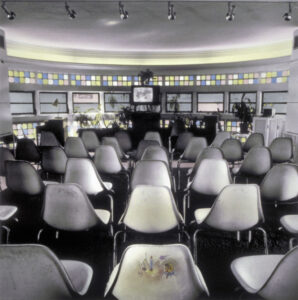
In most of my work, I intentionally leave people out of the frame. I find that the absence of the figure makes the image more timeless and universal. These spaces, though uninhabited, are never truly empty. They are charged with the lingering traces of those who once passed through them, faint impressions left behind in objects, arrangements, or wear. I think of it in archaeological terms: as if I’m uncovering the markings of past lives. Nothing is too small to matter; every detail contributes to the overall sense of presence.
The emptiness in my images can be both an invitation and a reflection. I invite viewers to inhabit the image, to project their own stories and memories into the environment. At the same time, these spaces are also deeply personal, memories and histories I’ve encountered, and sometimes, that only I know. Ideally, the work is open enough to resonate with others, yet grounded in the specific, unseen presence of the people who once filled the space.
When you work with color applied by hand to black-and-white images, you create a tension between the tangible and the imagined. Are you looking for this intervention to “awaken” the image or to take your pieces into a territory placed between painting and photography?
I am hoping to create tension between what the viewer sees and what is imagined.
I don’t claim that my work is documentary, though if I left the images in black and white, they could potentially be read that way. By introducing color, I consciously shift the image out of that realm and into a more personal, interpretive space. The hand-applied color allows me to reinvent the scene; it’s no longer just a record of a moment, but a reinterpretation through my perspective.
I’m meticulous in how I apply color, often leading viewers to initially believe they’re looking at a traditional color photograph. But once they realize the image is hand-painted, their perception shifts, they begin to question what’s real, what’s constructed, and where the boundaries between painting and photography truly lie. That tension is intentional. It’s not just about awakening the image, but about creating a space in between mediums—where the tangible and the imagined coexist.
In the NBC News interview, “Silvia Lizama’s Haunting Lens Reinvents Home Life,” you said that you didn’t set out to create “Latina” or “political” artwork. However, I suppose your experience as a migrant and refugee inevitably informs your work. Do you feel this influences your gaze and sense of aesthetic?
Absolutely, my life experiences have deeply shaped my aesthetic. I happen to be a Latina that emigrated to South Florida for political reasons. With time and reflection, I’ve come to see more clearly how my personal history is embedded in the images I create. Growing up as a migrant and refugee; those early memories living in temporary spaces (like hotels and rental units) after arriving from Cuba and living in sparsely furnished interiors, left a lasting impression. They instilled in me a sensitivity to impermanence and a deep interest in spaces that feel in-between or unsettled. That sense of transition, of quiet observation, continues to influence how I frame and construct my images. I still don’t feel my work is political or necessarily defined as “Latina” but the lens through which I see and create is undeniably shaped by that experience.
After more than four decades of photographing, coloring, and archiving images, what new visual territories or repertoires interest you? Are you interested in exploring different directions or aesthetic formats with your work? Does your photography continue to serve as a form of resistance against the visual saturation of our time?
I recently retired after more than 40 years of teaching photography at Barry University, marking a significant shift in both my daily life and my access to photographic facilities. As photography continues to evolve, especially with rapid advances in digital technology, I’ve found myself drawn to exploring new visual territories that build on my past while embracing the present.
To adapt, I taught myself the process of digitally hand coloring photographs, an approach that mirrors the aesthetic decisions I’ve long made with traditional photo oils on silver gelatin prints. During my final semester teaching, I had the opportunity to guide a student through both techniques, and that experience sparked the idea for a new body of work created through digital hand coloring. Interestingly, while the digital process offers certain technical advantages, I’ve found it to be more time-consuming than traditional methods, and I still wrestle with the challenge that digital prints lack the uniqueness of a one-of-a-kind hand-colored photograph. Even so, my hope is that the core of my aesthetic remains intact and is clearly expressed through this new medium.
This transition has led to the creation of my latest project, the Taxidermy Series, which I’ll be exhibiting in a solo show opening September 18th at Art Media Gallery in Little River. While I continue to reflect on photography’s role in a world oversaturated with images, this new direction feels like both a continuation and a reimagining of my visual language—one that embraces the changes and new realities in my life.