


“Abakuás are known for their music, dance, rituals, and distinctive symbols, including tattoos,” says photographer Jorge Bonet, interested in how this ancient body art integrates into the tradition of the secret and religious society which originated in the Calabar region (Nigeria) and subsequently developed in Cuba during the colonial era (19th century).
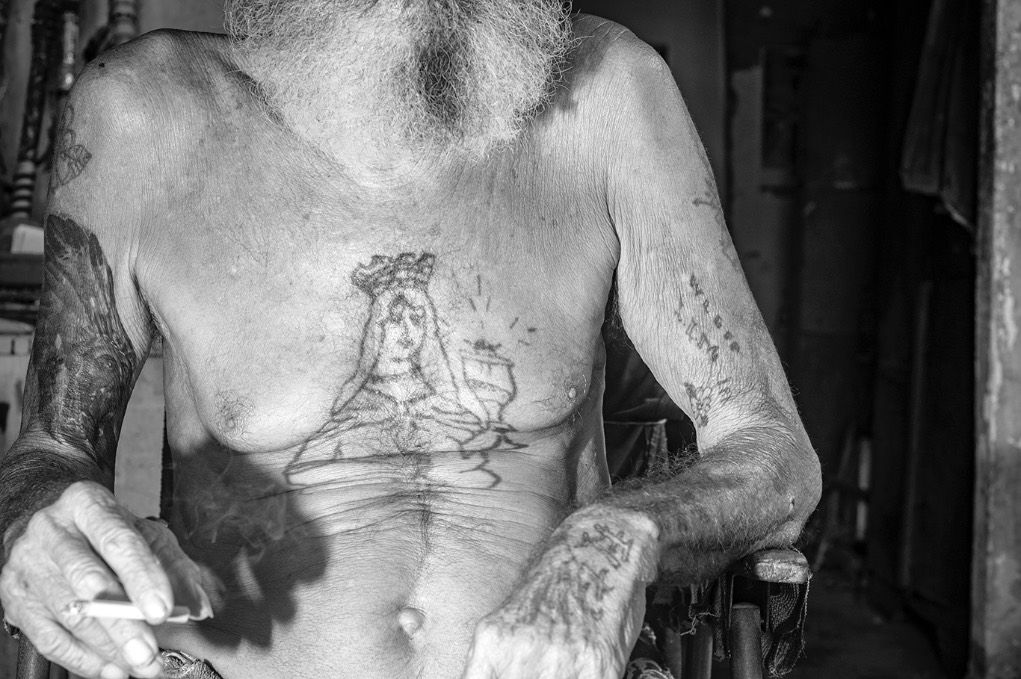
Bonet explains that “abakuá tattoos are considered sacred […]. These tattoos often represent symbols and figures associated with abakuá mythology, such as sacred animals, protective spirits, and natural elements.”
Here, he portrays Julián: his chest, his back, his arms, his feet… Also, his face, painstakingly tattooed over the years.
“Julián is a unique individual, known in the municipality of Regla, not only for his professions as a tattoo artist and craftsman of iremes but also for the love with which he speaks of his abakuá religion,” says the photographer, who listens to him talk about life, about those markings on his body: “what the first ones were and the reason for each one…”

Often, these figures have a practical function beyond their hidden religious and spiritual meanings. “Some tattoos are used to identify members of the abakuá society, while others may indicate rank or position within the hierarchy.”
Finally, Bonet warns that “it is necessary to respect their meaning and not use these tattoos if one is not a member of the abakuá society.”

“The inappropriate use of these symbols can be considered offensive and disrespectful to the ñáñigos,” he says, and Julián seems to confirm it, silently, with this gaze.


* Photographs authorized by Jorge Bonet.
** Translation by Fiona Baler.


[…] La carne de Julián: tatuajes de un Abakuá […]
why choose a white man for this lol?