Y así caminaríamos […], como en la anécdota del arquero japonés donde el arco y la flecha se vuelven invisibilidad.
José Kozer
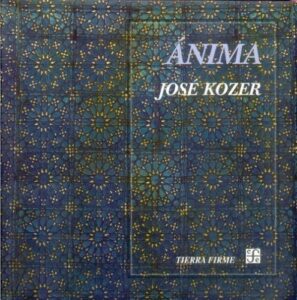
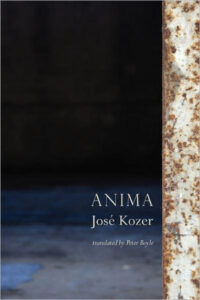
Ánima (Fondo de Cultura Económica, 2002) opens with José Kozer’s reflection on his steadfast commitment to making poems “hasta el día de su muerte”. Addressing the reader directly, he speaks about himself in the third person and as a sixty-year-old man narrating the agony—and the fulfillment—that has marked his dedication to poetry. Kozer elucidates the mental process by which every poem in this collection, except for the first and last one, bears the same title—“‘Ánima’: Es más, ese hombre decide en lo adelante y hasta el día de su muerte que va a seguir escribiendo poemas que, de tener ese tono, llevarán por título ‘Ánima’.” Repetition, in conjunction with his desire to achieve a state of “dulcificación de su persona y de su escritura” [mildness of being in his personality and his writing, Boyle 2] are two cornerstones of his poetry, explains Kozer: recurrence, circularity (“el punto de partida que tiende (necesita) cerrarse en una oval […] en que lo último regresa a lo primero…”). The ethos described in the prologue of the book connects with the perspective of Zen philosophy which teaches the cultivation of aligning the external objectives that guide the individual’s art or trade with their cultivation of “la obra interior,” which consists of achieving inner equilibrium and oneness of being. In that practice, I suggest, the author would find the necessary wisdom for achieving mildness of being in his craft.
Kozer’s articulation of the principles that undergird the poems in Ánima includes the deep ignorance from which his poetry originates: “Lector, estos poemas carecen de voluntad poética […] proceden de un fuerte sentimiento de irrealidad relacionado con el hondo desconocimiento que su autor experimenta ante todas las cosas, y, sobre todo, las cosas relacionadas con su future.” Existential heaviness characterizes this passage. The implicit tension caused by the ignorance before all things resonates with core dogmas of Stoicism. For example, pursuing “nobility of soul represented by the purity of our intentions,” striving “to act justly in the service of other people… and to think with rectitude and veracity,” constructing a life that contributes to the common good, which consequently prepares us to reach a good death (The Meditations of Marcus Aurelius, 1992, 232, 35).
The last paragraph of the prologue echoes these Stoic dogmas insofar as it represents the author striving to live a deeply moral human existence through his writing:
Lector, estos poemas carecen de voluntad poética […]. Poseen un ánima que es un decoro: el de la escritura que consciente de la existencia de […] quizás muchos centros de base inaprensible, no obstante se somete al atrevimiento de ponerse a hilvanar letras…, no como un asedio a ese centro o centros que lo eluden sino como un acto de manifiesta devoción en que el poema, cotidiano, artesano, procura su propia dulcificación imitándose plegaria (7-8).
The statement connotes humility in a spiritual sense—the author surrenders his ambition to possess complete mastery of his craft as he wrestles with the elusive and unfathomable nature of words. He becomes aware of the vanity of apprehending in poetry what is unknown about the world, of desiring “todo el vocabulario,” as Kozer states elsewhere. That humility also suggests the idea of seeking the empathy of the reader in light of the complexities that make up his poetry. The sixty-year-old man that Kozer depicts in the prologue emerges as wanting to alleviate the challenges that Ánima’s poetic form may and will present for the reader.
The prologue closes with the metaphor of Kozer’s poems emulating prayer (“imitándose plegaria”). “Plegari” denotes supplication to a divinity for granting a favor. In Kozer the favor which would be granted is for the author and his poems to enter a state of being in which death holds no fear. Prayer, humility, equanimity, meekness—each of these words is associated with the process of “dulcificación” to which the author aspires. But there is more to this serene rhetoric than is immediately apparent. From the perspective of the author’s declared ignorance before all things, it serves the purpose of drawing attention away from what he knows well: that he has not overcome the vanity of wanting to have total command of the tools of his art
and that the external objectives of his vocation of poet have not fully prepared his soul for moral transformation. Kozer’s explanation of the foundations of his craft (“el desconocimiento”, “lo inaprensible”, “el atrevimiento de hilar palabras”, “la circunferencia”, “el anhelo de bien morir”, the idea of the artisanal poem imitating prayer) shows a man beseeching God to grant his poetry mastery of the inapprehensible nature of its centers. The following verses in which Kozer reaffirms his devotion to writing poems offer a glimpse into this dialectic: “hasta el día de su muerte” (7), “una / vida (por / qué / no) / haciendo poemas” (14), “(impenitente / grafómano)” (161).
* * *
Death and the fate of the soul as it relates to moral failures and virtues constitute a central theme in José Kozer’s poetry. His delineation of the author of Ánima states: “Asimismo, escribiendo esos poemas, ese hombre de sesenta años intuye que de haber un sobremundo como el que Dante nos revela, […] por sus vicios y virtudes, lo más probable es que al morir tenga que pasar cierto tiempo en algún punto del Purgatorio.” (8)
Catholic dogma establishes that Purgatory is the process of purification and temporary punishment which the souls of individuals, who were neither unrepentant sinners nor saints, go through after death in preparation for heaven. Purification of the soul is not guaranteed and requires sincere repentance of the faithful, asserts Christian theology. The belief in life after death offers solace to people who practice Christianity. In light of this, Kozer’s reference to Purgatory may imply the author’s wish to inhabit the benevolence articulated by the belief in eternal life. This interpretation is reinforced by the fact that Purgatory or the contemplation of eternal life does not exist in Judaism, a faith which Kozer profoundly explores in his poetry.

The immortality of the soul, Eternal Return, the return to the original fire, the recurrent renewal of Spirit and consciousness are themes present in Kozer’s elucidation of the circumference-like movement of his poems and in his speculation about the journey of his soul in Purgatory:
Dado que el autor de estos poemas nació en una isla y dado que el Purgatorio es una isoletta (“Questa isoletta intorno ad imo ad imo” ) entiende ahora que los poemas que configuran Ánima participan de este otro fundamento: el de la recurrencia […] el punto de partida que tiende (necesita) cerrarse en una oval […] en que lo último regresa a lo primero; en este caso la isla se dirige a la Isla, entronca (germina) en la isoletta (8).
Dante invented Purgatory as a mountain-island in The Divine Comedy. Kozer uses this allegory to baste a poetic vision of Cuba, his homeland. “Mi primer pueblo de la conciencia es el pueblo Cubano […]. Nazco cubano y luego reconozco que soy también judío,” he declares in an interview with Jacobo Sefamí (De la imaginación poética, Monte Ávila, 1993, 233). Kozer’s treatment of Purgatory foregrounds a literary view of Cuba’s redemption, of its rebirth as a society free from authoritarianism: “lo último regresa a lo primero; en este caso la isla se dirige a la Isla, o Cuba entronca (germina) en la isoletta.” Kozer’s envisioning of Cuba as an island germinating joins Dante’s description of the lower terraces in the mountain-island of Purgatory, where vegetation consists only of plants that grow in inhospitable landscapes. Kozer’s reconstruction of Dante’s allegory suggests an inner connection between inhospitable spaces where plants grow and his commitment to basting poems. This scenario underscores the themes of eternal return and recurrence of renewal that permeate this book.
* * *
Of the sixty poems that comprise Ánima, only the first one, “Del debe,” and the last one, “Legado,” have a differentiating title. Visually, most of the poems in this book resemble interminable columns or furrows of words, of memories at random put together which create discord while pursuing harmony. In many instances Kozer seems to select words for their aesthetic properties more than their coherent relationship with the poem as a whole. All the poems exhibit unsettling line breaks, sudden focal shifts, disorienting sequence, disconcerting punctuation, accumulation of obscure synonyms, profusion of nature-related nouns, whimsical dispersal and congregation of verbal images. Rhetorical figures such as metonymy and synecdoche abound in this collection, exhibiting a narrative technique that is reminiscent of Kozer’s earlier books—Bajo este cien (1983), La garza sin sombras (1985) and Carece de causa (1988), among others. Said structure, intimates Kozer in his description of how the sixty poems came to be titled Ánima, represents a myriad of vestiges drawn from learned traditions, languages, art movements, ancient prose and poetry, eastern spiritual practices, modern literature and personal life experiences that Kozer’s craft incorporates, reshapes, subverts, transforms. One example is the fragment that evokes the Spanish mystics Teresa de Ávila (1515-1582) and Juan de la Cruz (1542-1591) to capture the centrality of the act of reading in Kozer’s writing: “en / las / tardes / invernales / leyendo / en alta / voz / Vida / Sta. Teresa. / San Juan.”
“Del debe,” the first poem in Ánima, alternates between one-word verses and lines made up of very short phrases. With each line the reader faces allusions to a panoply of fields of knowledge; the names of composers, painters, ancient writers and historical figures are juxtaposed to the names of flowering plants, insects, constellations in the sky and household objects. The poem reads as a long recitation that communicates in the manner of fragments Kozer’s rhizomatic formation as a poet. His recount of certain aspects of human experience sets aside expectations of a logical semantic sequence in favor of the intriguing resonance of many of the words that he uses in this poem. The intricacies of such a technique support the hypothesis that I advance here about the prologue in Ánima: on one level, it means Kozer’s endeavor to ease the readers’ comprehension in their attempts to unravel the internal coherence of his poems.
Thematically, “Del debe” conveys José Kozer’s sentiment of a debt of gratitude as he reflects on a life dedicated to turning into materia prima for his poems sacred scriptures, biblical stories, scientific views about the universe and its celestial objects, ideas, words, thought, and images produced by novelists, painters, musicians, poets, and ethical perspectives posited by various philosophical traditions. “Del debe” closes with the author’s assertion of his unremitting commitment to poetry—to the “atrevimiento de ponerse a hilvanar letras, hilar filigranas de sílabas y de palabras” (8) until the end of his mortal life. At the center of said commitment Kozer situates the act of reading, captured in this reference to Hebrew Scriptures: “Y / por / supuesto / […] / David / (de / reyes / Rey): / una / vida / (por/ qué / no) / haciendo / poemas / (carezco / de / conjetura)” (14).
Jewish, Christian and Zen traditions converge in Kozer’s poetry at different stages of its development. Regarding Judaism, the reader can appreciate his detailed treatment of Jewish traditions and cultural history in the multitude of poems that he has written over decades. Poetical expression associated with Christianity, on the other hand, appears as ornament in the form of synecdoche, in references to Spanish mystics, Italian and Spanish painters from the Middle Ages and the Renaissance known for their depiction of New Testament stories and retablos (Beato Angélico, Cimabue, Giotto, for instance). Kozer engages conventional representations of the Virgin Mary in art, specifically Our Lady of Guadalupe wearing a blue cloak adorned with stars: “el manto de la Virgen / cubierto / de cocuyos” (“Legado”, 154). Certain concepts in Catholic theology receive aesthetic consideration, examples of which are the lines focusing on Kozer’s love for his two daughters and his conceptualization of their character: “dejo a mis / dos hijas / por partes / (transubstanciación) / iguales / (transverberación) (156-157). “Transverberación” signifies the mystical experience of the heart being pierced with divine fire as a result of becoming one with God. “Transubstanciación” symbolizes the moment in the Eucharist when the bread and wine symbolically become Christ’s Real Presence—body and blood. These two terms break the conventional logic of the account that the author gives of his last testament and will. It can be argued that the use of transubstanciación y transverberación in this poem responds to their alluring sound and lexical composition more than to their religious meaning.
* * *
“Legado,” the last poem in Ánima, narrates the moral inheritance that the author leaves to his two daughters. This inheritance includes the author’s meditation on a life devoted to writing poetry on the one hand, and the ancient ideal of practicing wisdom on the other. In the midst of elliptical movements, disquieting breaks of pattern and confusing punctuation, the repetition of certain verbs functions as signposts that help the reader discern the internal logic of the narration.
The opening verses (“Dejo / a mis dos / hijas / por partes / iguales/ las partes/ desiguales”) set the tone for different types of repetition. The verb dejo becomes a nucleus from which the various conceptualizations of the poet’s last will and testament emanate: “dejo a mis / dos hijas”, “que os dejo / de Guadalupe / la risa.” The poem quietly reveals a variation of the motif “dejo a mis / dos hijas” by replacing dejo with lego—the legal term for his last testament and will: “a mis dos / hijas / lego” (“la estrella / Vega,” “efímera / constelación’”), “y como/ precaución/ leer/ y releer/ a diario/ Eclesiastés / (vanitates).” These elements symbolize author’s immaterial bequeathal to his daughters: an ethical conscience, the practice of humanistic endeavors and moral virtues, the pursuit of wisdom. The significance of this particular legacy is also anchored in the act of reading: broadly and deeply.
Dejo / a mis dos / hijas / […] / leer a / Villon. / […] / leer a / Hita. / […] / dejo a mis / dos hijas/ por partes / […] / iguales / leer a / Quevedo. / […] / En Sión/ leer / Salmo 136/ Deuteronomio / 6:4 / 6:4-9/ 11:13-21 / Números / 15: 37-41 / Shemá. / [..] / y como / precaución / leer / y releer/ a diario/ Eclesiastés / (vanitates). (155-160)
The leitmotif of the act of reading emphasizes the vision of bequeathing his daughters not material or transitory things, but the teachings recorded in the Old Testament, a set of books abundantly quoted by Kozer in his poetry. The verses from Psalm, Deuteronomy and Numbers cited above are part of the Jewish prayer Shema. These Bible verses proclaim the oneness of God, God’s inexpressible love, and the memory of his enduring mercy reflected in the lives of those who keep his Commandments; Shema is also a prayer about reawakening the memory of the common good as a fundamental human goal and growing to be attentive to love of neighbor. Ecclesiastes as daily reading practice would provide the resolve to avoid falling into immoderate ambitions, be it material or spiritual. Ecclesiastes is an important biblical reference, particularly its teachings on the dangers of vanity; they confront the author with the vanity implicit in his desire to grasp words in their totality. The tension between the author’s vanity and his aspiration to wisdom, and to “el bien morir,” which encompasses “ser buena persona, templar el exceso, la fogosidad,” is precisely what makes “Legado” a compelling poem. If vanity is a central theme in “Legado,” Guadalupe (Kozer’s beloved) and her laughter operate as a fulcrum in the aspiration to inner freedom: “mas no/ desesperéis / que os dejo / de Guadalupe / la risa”. Bequeathed by the author to his daughters, Guadalupe’s laughter stands for the morally guiding force that the author wills for his two daughters.
The poetical experience of shedding vanity continues in verses showing self-deprecation. Kozer playfully imitates the language of Santa Teresa de Jesús belittling herself in her autobiography Libro de la vida. He makes fun of what I interpret as the inability to grasp the prime matter from which his poems, together with their multiple centers, originate. The author mixes up one thing with another as a result of his “desconocimiento”, a key foundation that Kozer identifies in his poetry: “confundo / (tamiz) / islas / lomas / lilas floridas”, “confundo / […] / progenitores / con trojes.” Nevertheless, “el desconocimiento” is not the only theme operating in this line. Confusing words illustrates José Kozer’s intentional poetic imagination, taking the reader back to the tone of humility that shapes the author’s prologue. Likewise, self-deprecation in this poem speaks of reason as he looks into the actions of his soul. The truth revealed by this internal process is tied to the author’s self-ridicule when he asks his daughters for their blessing: “Shemá / soy / (hijas) / paramento / (segmento) / mostacilla / de abrupto / paramecio / revertido / (dadme la / bendición) / […] / judío / transversal / […] / (bólido / ocambo) / […] / volador / de a peso” (161). He requests his daughters to dress him as a “espantapájaros” (scarecrow). Kozer minimizes the full weight of the implications of such semblance by manipulating the element of time in the poem. He infuses the poem with the names of the excessive ornaments with which he clads his own figure; this technique delays the action of his daughters dressing him like a scarecrow. These names highlight a humorous portrait of the author. Underlying that depiction, however, is the theme of vanity, the illusion of possessing greatness.
“Legado”’s concern with vanity and the ephemeral nature of the human body continues in one-word verses where the author defines himself in relation to unicellular organisms, to very small seeds of a flowering plant and to adornments and vestments seen in altars and religious ceremonies (as “paramento,” “mostacilla,” “paramecio”). The juxtaposition of “la estrella / Vega” (one of the brightest stars in the sky) interrupts this iteration of his self-deprecation. It can be interpreted as a momentary alignment of his being with the existence of the whole universe. The state of “dulcificación” experienced by the author via the bright star Vega in the northern celestial hemisphere immediately gives way to a ruthless description of himself: “soy / […] la estrella / Vega: / mosca / su luz, / moscardón / su año / luz, / efímera constelación / a mis dos / hijas / lego.” Kozer maintains the interplay between the pursuit of things that are evanescent and the cultivation of a life that prepares the person for a good death. The words “mosca” and “moscardón” introduce ideas of putrefaction, excrement, infectious disease. These elements are the predicate of the verb ‘soy’ [I am] that appears eleven verses prior to this eschatological moment in the poem. Eschatology and the bequeathal of an ephemeral constellation to his daughters further develop the theme of the author wrestling with vanity in relation to his devotion to poetry writing.
“Legado” is the last poem in Ánima. In this regard, it acts as Kozer’s concluding thoughts about the finite nature of life in the material world. He points to this understanding of “Legado” in the verses where the author speaks of himself through references to the bones of his anatomy, a sequence of nouns whose expression of mortality Kozer mitigates by interweaving vivid decoration of objects that arouses feelings of playfulness, and a lyric envisioning, again, of a state of being where death holds no fear: “A las dos / encomiendo / […] / vestirme / (espantapájaros) / en mitad de / los campos / bajo Próxima / del Centauro / […] / orlas / el fémur/ ribetes / la cadera / florones / el esternón / en una sien / caireles: / pasamanerías / (falanges) / (astrágalo) / (metatarso) / en Sión” (158). Kozer extends this portrait of himself covered with ornaments to his existential fulcrum—making poems—in the verses “judío / transversal,” “(de fecciones / arrendatario)/ impenitente / grafómano.” The attribute “transversal” functions not as linguistic ornament, but as a pithy statement of Kozer’s intricate poetical writing.
“Legado” concludes with one more detail about Kozer’s meditation on the naked truth of the material rewards of writing poems: his two daughters will inherit only “un par de pesos” for he possesses no tangible wealth. But it is alright because his daughters’ true inheritance is a spiritual and ethical consciousness. Furthermore, part of their inheritance is the natural world depicted in Ánima, and which abounds in “Legado” (“Los crocos/ pespunteando/ amarillos / morados / blancos; islas / lomas / lilas; esporas”), Guadalupe’s love in the midst of grief, and Kozer’s vast explorations of humanity and the universe through language. This spiritual-moral-poetic last will and testament bring into view a central meaning of José Kozer’s delineation of “el bien morir” in his prologue to Ánima—the ideals of “llegar a ser completamente bueno” and of that of reaching “dulcificación en la escritura”.